If you are planning to sell, renovate, or build in Calgary, you may be told you need some kind of survey.
Two survey-related documents that are often mixed up are Real Property Reports (RPRs) and plot plans (also called “Grade Slips,” particularly in the City of Calgary’s Lot Grading Bylaw). Asking for the wrong one is a quick way to add stress to an already busy timeline.
This article explains what a Real Property Report (RPR) is, what a plot plan is, the six key differences between them, and how to decide which one you actually need so you are not paying for the wrong thing or delaying a deal.
What Is A Real Property Report (RPR)?
In Alberta — and especially in Calgary — a real property report is the survey document most closely tied to real estate transactions and municipal compliance.
An RPR is a legal document prepared and signed by a licensed Alberta Land Surveyor. It shows your property boundaries and the location of all permanent, visible improvements — your house, garage, decks, fences, sheds, and similar structures — relative to those boundaries.
It also identifies easements and rights‑of‑way and flags any encroachments where those improvements cross onto neighbouring land or into municipal or utility corridors. The municipality uses the RPR to decide whether a property complies with current land‑use bylaws, which is why a current RPR with a Certificate of Compliance is typically required to complete a property transaction in Alberta.
What Is A Plot Plan?
Plot plans are often mentioned in the same breath as RPRs, but they have a very different job. A plot plan is a planning and design drawing, used primarily for permits and construction rather than for property transactions.
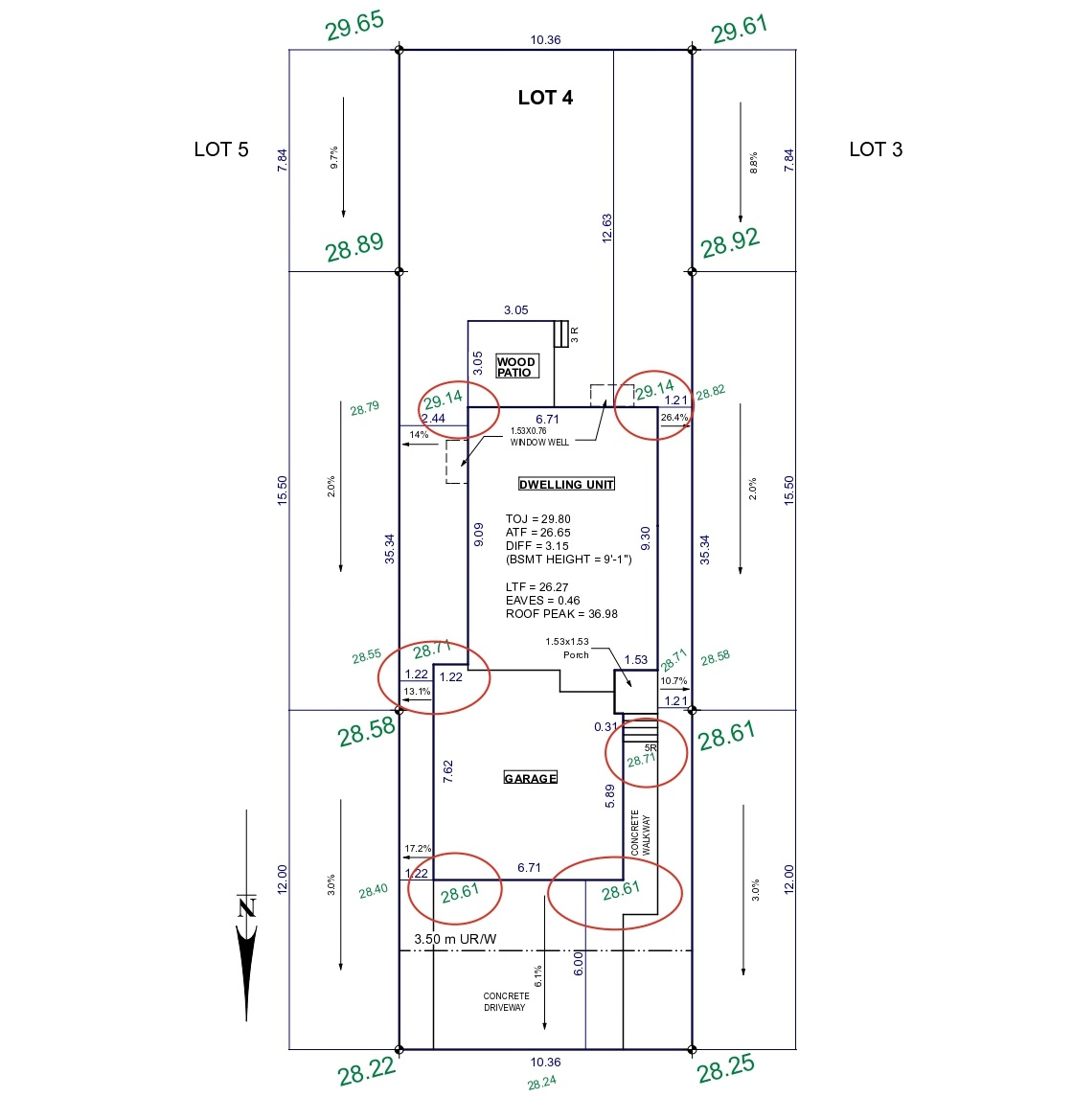
In Calgary—especially in new subdivisions—a plot plan is a scaled drawing of your lot that typically shows the property boundaries, the footprint of existing and/or proposed buildings, distances to property lines (setbacks), and grade information to support drainage and lot grading. For many new‑build purchases, this plot plan is the only survey‑related document the purchaser receives at possession. Some developers choose to provide a plot plan instead of commissioning a Real Property Report for each individual lot.
Municipalities use plot plans to answer questions such as “Does this proposed garage meet the side‑yard setback?” or “Do the final grades on this new build match the approved drainage pattern?” A plot plan supports planning and permitting, but it is not treated as the transaction‑ready record of existing site conditions that an RPR is, and it is not a substitute for an RPR when you need municipal compliance or when you go to sell.
6 Key Differences Between RPR And Plot Plan
RPRs and plot plans often look similar at a glance, which is why they are easy to confuse. Under the surface, the two documents differ in purpose, legal status, who prepares them, the level of detail they carry, how they are used, and what you should expect when ordering one.
As‑Built Reality Vs Design Intent
The first difference is the point in time each document focuses on.
An RPR is an as‑built snapshot of your property: it records the boundaries and permanent, visible improvements as they actually exist on the day the survey is completed. It focuses on current conditions, so you can see how the finished site fits together in the real world.
A plot plan, by contrast, is about design intent. It shows where proposed (and sometimes existing) structures are planned to sit on the lot so that designers, builders, and municipal reviewers can work through setbacks, site layout, and drainage before or during construction. It supports design decisions and permit applications for future improvements, rather than documenting the finished state of a property.
Legal Status In Calgary
An RPR is a legal survey product. A licensed Alberta Land Surveyor signs it and accepts professional responsibility for its accuracy. It is the document the City of Calgary expects to see when it issues a Certificate of Compliance, and it is the document real estate lawyers expect when they remove conditions and complete transactions.
A plot plan, by contrast, is a supporting plan. It helps with design, permitting, and grading, but it is not treated as the authoritative record of existing site conditions.
Calgary will not accept a plot plan instead of an RPR for municipal compliance or for the purposes of a real estate transaction. That distinction matters: a plot plan may help you obtain a permit, but you will still need an RPR when you want the City’s formal compliance decision or when you go to sell.
Who Can Prepare Each Document
The third difference is who is allowed to produce each document and what that implies.
An RPR must be prepared and signed by a licensed Alberta Land Surveyor. That is what gives it legal standing and allows the City, lenders, and lawyers to rely on it. When Third Rock Geomatics signs an RPR, we are putting our professional stamp behind the boundaries and measurements shown.
A plot plan may be prepared by different parties, depending on municipal rules and the complexity of the job. In Calgary, for example, the Lot Grading Bylaw allows a professional engineer, architect, or Alberta Land Surveyor to stamp or seal a grading plan, so the City is focused on having the right information and a qualified professional take responsibility rather than limiting it to a single profession.
For some simpler permits, the City may accept a plan drawn by a designer or builder if it meets their standards. The key point is that there is more flexibility around who can produce and sign a plot plan than there is for an RPR, which must always be prepared and certified by a licensed Alberta Land Surveyor.
Level Of Detail And Accuracy
Both documents are scaled drawings, but an RPR is built on field measurements taken by a survey crew and tied carefully into the legal survey fabric of the block. It must show all significant permanent, visible improvements, easements, and encroachments, and it must do so in a way that allows the City to test it against bylaws.
Plot plans can range from very detailed, survey‑grade documents (for example, lot grading plot plans for new homes) to simpler, design‑focused sketches that meet minimum permit requirements. Many plot plans focus on setbacks and grades, not on capturing every existing structure on the parcel. That is why a plot plan that was “good enough for the permit” is still not treated as the authoritative record of existing conditions in the way an RPR is.
Usage
You typically use an RPR when:
- You are selling or purchasing a home.
- You need a Certificate of Compliance.
- You are dealing with encroachments, easements, or boundary disputes.
You typically use a plot plan when:
- You are applying for a development or building permit for new construction or an addition.
- You are dealing with lot grading or final grade certification on a new build.
- A builder or designer needs a clear base plan to layout a project relative to boundaries and grades.
In practice, many projects use both at different times: a plot plan early in the design and permitting stage; an RPR later, when you are ready to sell or need the City to confirm that finished work complies with placement rules.
Cost And Timeline
The final difference is what you should expect for scheduling and pricing.
Because an RPR must be prepared and certified by a licensed Alberta Land Surveyor and then submitted to the City for compliance, it is typically treated as a higher‑stakes, time‑sensitive survey product.
Third Rock delivers RPRs in 3–5 business days from order confirmation and applies for the City’s compliance review on your behalf. Pricing is fixed and all‑inclusive, which means the quote covers fieldwork, preparation of the RPR, the municipal application fee, title search, compliance registration, and typical plan purchases. There are no surprise “extras” added at the end.
Plot plan pricing and timing vary more because requirements vary. For simple permit applications or conceptual planning, a plot plan may be quicker or less costly than a full RPR. For more complex lots—especially where accurate boundaries and grades matter—the cost and timing may approach or exceed those of other survey products. The main thing to remember is that a plot plan is not a substitute for an RPR when an RPR is required — no matter its cost or level of detail.
When Do Calgary Homeowners Need An RPR?
It is helpful to think of the RPR as your transaction and compliance safeguard. If your question involves buyers, lenders, lawyers, or the City’s formal compliance process, you are almost always in RPR territory.
You need an RPR when you are selling or buying a home, because a current RPR with a Certificate of Compliance is required to complete a property transaction in Alberta. You also need an RPR when you are dealing with encroachments or boundary disputes involving the City, or when you want the City’s official opinion on whether your existing improvements meet current bylaws.
In each of these cases, the RPR brings the facts to the surface so that lawyers and municipal reviewers have something solid to work from.
When Do Calgary Homeowners Need A Plot Plan?
Plot plans are important when you are planning or permitting new work, especially for construction and grading.
If you are building a new home, adding a garage or addition, constructing a large deck, or dealing with final grades on a new build, the City may request a plot plan that shows proposed or existing work relative to boundaries and grades. Designers and builders also use plot plans to coordinate layouts, confirm setbacks, and plan drainage. In these situations, the focus is on future or in‑progress work, not on completing a real estate deal.
If a builder or permit checklist specifically asks for a “plot plan” or “lot grading plan,” that is usually a sign that you are in this planning category, not in the RPR/compliance category—even if a survey is still required.
How To Determine Whether You Need An RPR Or A Plot Plan
Consider who is asking and what decision they need to make.
If the request is coming from a lawyer, lender, buyer, or the City’s compliance team, and the decision involves completing a transaction or confirming bylaw compliance on existing work, you almost certainly need an RPR. Plot plans are not accepted in Calgary for Certificates of Compliance or as substitutes for RPRs in property transactions.
If the request is coming from a builder, designer, or a permit checklist for proposed work, lot grading, or a construction layout, you may be dealing with a plot plan or another planning‑oriented survey deliverable. In some cases, that plan will still need to be prepared by a surveyor; in others, the municipality may accept a designer’s drawing.
When in doubt, this is exactly the kind of question you should put in front of a licensed land surveyor.
How Third Rock Geomatics Can Help
Third Rock Geomatics is built to help Calgary homeowners, realtors, and lawyers choose the right document first, then deliver it quickly and reliably.
We offer:
- Fast RPR turnaround: 3–5 business days from order confirmation, plus City review time.
- Fixed, all‑inclusive pricing: RPR quotes include fieldwork, RPR preparation, and the municipal application fee, title search, compliance registration, and typical plan purchases.
- Sincere, Responsive Service: if there’s a better solution for your needs or if something falls outside our scope, we’ll let you know and guide you in the right direction.
For residential projects that involve planning and construction, our Residential Land Surveying services cover other survey deliverables such as subdivision surveys and topographical surveys. If you come in asking for an RPR when your real need is a plot‑level plan tied to a construction project, the team will say so and point you in the right direction.
If you tell us why you think you need a survey document and who is asking for it, we will tell you whether that is truly an RPR request, a plot plan request, or something else — and what you should do next so the document does its job and reduces any project- or transaction-related stress.
Frequently Asked Questions
Do I Need An RPR To Sell My Home In Calgary?
In practical terms, yes. A current RPR with a Certificate of Compliance is required to complete a property transaction in Alberta, and Calgary transactions are built around that expectation. Without it, your sale may face delays, additional legal conditions, or the need to renegotiate at the last minute.
Can A Plot Plan Replace An RPR?
No. A plot plan is a planning and permit tool; it is not a legal substitute for an RPR. The City of Calgary will not accept a plot plan instead of an RPR for a Certificate of Compliance, and real estate lawyers do not treat plot plans as transaction‑ready documentation.
You may use a plot plan to help obtain permits or manage grading, but you should plan on an RPR for compliance and closing.
How Long Does It Take To Get An RPR In Calgary?
Timelines vary by provider. Third Rock delivers Real Property Reports within 3–5 business days of order confirmation, then submits them to the City for compliance. The City’s review time is separate, but Third Rock manages that process and keeps you informed so you are not left wondering where things stand.
Can An Outdated RPR Cause Problems?
Yes. An RPR is a snapshot of your property on the day the surveyor signed it. As bylaws change and as owners add or move fences, decks, garages, sheds, and other features, older RPRs may no longer reflect what exists on the ground.
That mismatch may lead to compliance issues, red stamps, and uncomfortable surprises when a buyer’s lawyer reviews the file. If the goal is to facilitate a smooth sale, it is encouraged to obtain a new RPR when you are preparing to sell.
How Much Does An RPR Cost In Calgary?
In Calgary, a Real Property Report generally costs somewhere between $600 and $900, depending on factors such as property size, neighbourhood, and timing, with costs increasing for large or irregular lots.
Third Rock uses fixed, all‑inclusive pricing, which means a single quote covers the survey work, RPR preparation, and standard municipal application fees, so you know the full cost up front and are not dealing with line‑item surprises while you are trying to keep a deal on track.