Everyone appreciates having good neighbours. People who will watch over your property, say hello as you come and go, or lend a hand when you need it.
Another way to be a good neighbour is to talk with the property owners around you before you undertake any major outdoor renovations, additions, or changes to your property.
When you build a fence, construct a new deck, take down a tree, or simply put up a prebuilt shed from a local hardware store, these activities often take place close to the boundaries of your property. Sometimes those boundaries are shared with your neighbours.
Talk with your neighbours first.
Before you get started on building a fence, as one example, talk with your neighbours about being involved in determining the location of the property boundaries you share and where the fence will be built.
You and your neighbours might think you know the location of your property lines. The reality is when property and landowners try to determine property lines on their own, they almost always get the location wrong.
It might seem tempting to read the distances on your own survey or Real Property Report, grab a tape measure and figure out for yourself where your property lines start and stop. Even when you are replacing an aging fence, the current location of that fence may not accurately represent the property boundaries.
Moreover, if you are already arguing with a neighbour over the placement of a retaining wall, fence, flower bed or tree, or about where your property ends and where their property starts, you will likely need a land survey to solve the disagreement.
Your municipality has a say in what you do on your property.
Most municipalities have requirements and bylaws that impact what you can do on your property. It is important to do your homework and consult with your municipality or county before making any major changes to your property.
First, most municipalities have setback requirements. Setback requirements dictate the minimum distance a building or structure must be placed from property lines, streets, or environmental features like wetlands or parks. They create buffers for privacy, safety, and aesthetics by requiring structures to be placed back from boundaries.
There are also municipal bylaws governing fence or privacy screen height, materials, and placement. These vary by municipality, so check with your local planning office. Check with your municipality to see what permits are required, and if there are any by-laws or other restrictions that may affect your construction.
How do you best determine your property boundaries and be neighbourly? Hire a land surveyor.
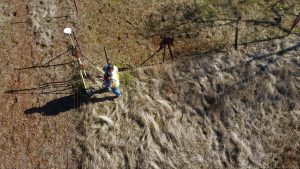
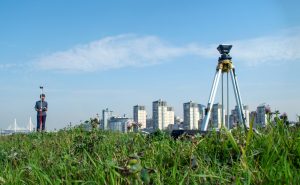
The only way you can be certain about your property lines is to hire an Alberta land surveyor to complete a fence line survey.
A land surveyor uses technology, legal and historical information and evidence to determine the boundaries of a property, while taking into account court decisions and government legislation. The land surveyor will locate your boundary lines and physically mark the boundary on the ground so you know where to build your fence or place a new structure.
If you think about the costs and penalties involved in a boundary dispute with your neighbours or municipality, the cost of hiring an Alberta land surveyor is well-justified. A surveying cost is minor compared to the potential costs of legal action, and the survey cost could be shared with your neighbour.
Think about future neighbours.
If the neighbouring property is sold and you have new neighbours, any verbal agreements with your old neighbour will not be binding on the new one. If you had any access arrangements with your old neighbour, be sure to disclose them to your new neighbour. Better yet, create a formal agreement with the old neighbour before the property rights are transferred.
If you used a land surveyor to determine your property boundaries, and future questions or disputes arise regarding the location of the boundary, the Alberta Land Surveyor who completed the survey maintains a professional obligation to review, discuss, and address the survey work and professional opinions provided.
It only takes a moment to be a good neighbour. If you consult with your neighbours before you tear down the fence or cut down a tree, you will not only win points with your neighbours but you may also save yourself a lot of time and grief in the future.
This article is the latest in a series written for the public to help Albertans better understand land surveying and the land surveying profession. It was written by The Alberta Land Surveyors’ Association, and is published with permission.