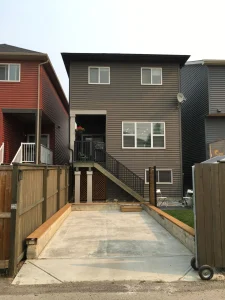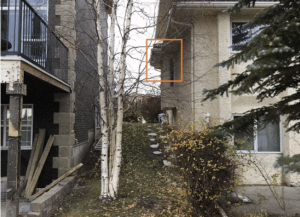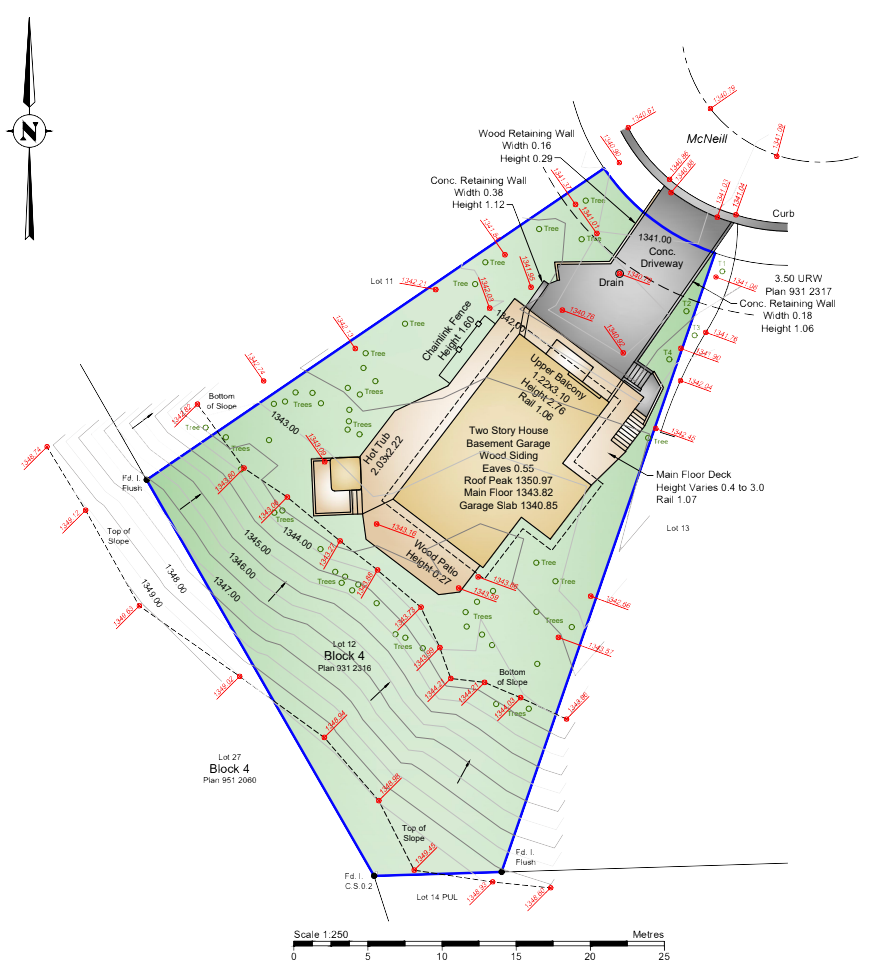
If you own or are about to buy a property in Alberta, the need for a Real Property Report (RPR) usually shows up right when things already feel stressful. In this article, we walk through seven common situations when you need an RPR in Alberta and how getting the right one at the right time can take pressure off buyers, sellers, realtors, and lawyers.
What Is A Real Property Report (RPR)?
Before you can decide when you need an RPR, it helps to understand what it is. Once you see what an RPR shows, it becomes clear why it sits at the centre of so many real estate conversations.
A Real Property Report is a legal document that a licensed Alberta Land Surveyor prepares and signs. It shows the property boundaries and the location of all permanent, visible improvements — such as the house, garage, decks, fences, sheds, and concrete pads — relative to those boundaries. An RPR also identifies registered easements and rights‑of‑way and flags any encroachments where structures cross onto a neighbour’s land or into municipal or utility corridors.
Municipalities use the RPR as the base plan for their compliance review. When the RPR is submitted, the City examines it against current land‑use bylaws and returns one of a few outcomes: a Certificate of Compliance, an encroachment advisory, or a requirement for a Development Permit.
In other words, the RPR is the snapshot, and compliance is the City’s official opinion about that snapshot.
When Do You Need An RPR In Alberta?
You do not need to order a Real Property Report for every small decision you make about your home. However, there are clear moments when lenders, lawyers, and municipalities expect to see a current RPR. In those situations, having it ready can be the difference between a calm closing and a frantic scramble.
Buying Or Selling A Home
The most obvious time you need an RPR is when you buy or sell a house. In Alberta, a current RPR with a Certificate of Compliance is typically required to complete a property transaction. It shows buyers, lenders, and lawyers exactly where the permanent structures sit and whether the City has raised any concerns.
If the RPR is missing, badly out of date, or clearly does not match what is on the ground, conditions can drag on and deals may wobble. A buyer’s lawyer may insist on a new RPR, and a last‑minute compliance review could reveal encroachments or setback issues that nobody had planned for.
Ordering an RPR early in the listing process is one of the simplest ways for sellers and their realtors to lower everyone’s stress and avoid a red stamp the week before closing.
Building A New Structure Or Addition
Any time you plan to build — and especially when building close to a property line — an RPR becomes important. New additions, detached garages, tall decks, retaining walls, sheds, pergolas, and widened driveways all affect how your property interacts with setbacks, easements, and neighbouring parcels.
Before you build, an existing RPR helps you and your contractor understand where structures sit now and how much room you have to work with. After the work is complete, a new or updated RPR shows where the new structure ended up and how it lines up with current bylaws.
Without that documentation, you may not discover that a deck is too close to the rear line or that a retaining wall sits inside a drainage right‑of‑way until a future compliance review forces the issue.
Resolving Boundary Disputes
When neighbours disagree about where the line really is, opinions and memories tend not to resolve much. A Real Property Report provides a neutral, professional reference that shows the legal boundaries and the measured location of fences, walls, sheds, and other improvements relative to those lines.
Because an RPR also shows easements and labeled encroachments, it becomes the starting point for resolving many disputes. In straightforward neighbour‑to‑neighbour situations on private land, that clarity may be enough for both parties to agree on whether a fence or wall should stay, move, or be rebuilt, without involving the City or lawyers.
When an encroachment affects an easement or City‑owned land — or when neighbours cannot reach an agreement — the municipality and, where needed, legal counsel ultimately decide through compliance reviews, permits, or encroachment agreements whether a structure may remain, require modification, or must be removed.
Mortgage Or Refinancing Requirements
Lenders need to understand what they are lending against. When you arrange a new mortgage or refinance an existing one, your bank or credit union may ask for a current RPR as part of its due diligence.
The RPR allows the lender and its legal team to confirm that the improvements on the parcel match the legal description and that there are no obvious boundary or compliance issues that would increase their risk. It also determines who else may have interest in the parcel.
If the only RPR available is older or does not show recent exterior changes, the lender may request an updated or new report before granting final approval. Knowing this ahead of time allows you and your mortgage broker to build the RPR into your timeline instead of discovering the requirement right before funding.
Legal Or Estate Planning
Real Property Reports also appear in legal and estate planning contexts. When a property is being transferred between family members, divided as part of a separation, or administered through an estate, lawyers often prefer to have current information about boundaries, improvements, and encroachments.
An RPR in these situations is less about immediate compliance and more about clarity. It helps the professionals who are responsible for the file understand what exists on the land today so they can plan for eventual sales, negotiate fair divisions, or advise beneficiaries about future risks. That in turn reduces surprises when the property eventually hits the market.
Subdivision Or Land Development
If you are considering subdividing land or creating new lots, you will need more than a basic RPR, but Real Property Reports still play a role.
Subdivision surveys and related plans handle the legal creation of new parcels. RPRs come back into the picture when those newly created lots are sold, because buyers and lenders still want a certified snapshot of what sits where on each parcel. Further, if there are existing structures on the lot that are intended to remain after subdivision, the Municipality must review an RPR to confirm those structures still meet bylaws once the new boundaries are in place (see Municipal Requirements & Compliance, below).
Third Rock’s subdivision clients typically work with the same survey team on both sides of that process: subdivision work to create the lots, and RPRs when the new homes or buildings are ready to be sold. That continuous involvement helps keep the survey fabric consistent and reduces the risk that boundary or easement issues will crop up late in the project.
Municipal Requirements & Compliance
By this point in the article, we have already talked about the City’s role in reviewing an RPR and issuing a Certificate of Compliance. Though in practice, compliance applications are only one of the ways you may find yourself dealing with the municipality around an RPR. The City may become involved whenever it needs to confirm what sits where on a parcel — whether that is for a planned application or in response to something it has seen or been told about on site.
Beyond standard compliance requests, the City may rely on your RPR when it investigates possible bylaw infractions, such as garages or sheds that are too close to lanes, or structures that sit over drainage swales and overland drainage rights‑of‑way.
Case studies on overland drainage show how an RPR can reveal that a playhouse, shed, or cantilever is inside a City right‑of‑way or does not match approved plans, which then leads to a City review, a development permit application, or a formal encroachment process. In some situations, the City may allow the structure to remain under an encroachment consent letter or agreement; in others, it may require changes or removal before it will issue compliance.
Why Real Property Reports Matter In Alberta
Across all seven of these situations, the Real Property Report plays the same role: it replaces guesswork with a clear, certified picture of your property. That clarity matters in Alberta, where municipalities actively enforce land‑use bylaws and where easements and encroachment rules can have real financial consequences.
For homeowners, an RPR reduces the risk that you are accidentally building over a line, using land that belongs to someone else, or ignoring a drainage or utility corridor that carries real restrictions. For buyers and lenders, it confirms that the parcel they are about to take on has been measured properly and checked against key rules. For realtors and lawyers, it removes one of the biggest sources of last‑minute friction in a deal by surfacing issues early.
When you pair an RPR with a Certificate of Compliance, you are effectively saying, “This is what was on the land, and the City has had its say.” That is what ultimately lowers the temperature for everyone involved: fewer surprises, clearer options, and documentation that you can rely on years after the deal closes.
How To Get An RPR In Alberta Quickly And Correctly
Knowing that you need an RPR is only half the battle. When and how you order it can have a big impact on your timeline. This is where Third Rock’s process is designed to make life easier.
Third Rock Geomatics specializes in residential Real Property Reports in Calgary and surrounding areas. We deliver RPRs in 3–5 business days from order confirmation, not including municipal review time.
Pricing is fixed and all‑inclusive, which means the quote already includes the municipal application fee, title search, compliance registration, and typical plan purchases. There are no hidden line items that appear later while you are trying to keep a deal together. The entire setup is designed so you are not left waiting or wondering what comes next.
If you are heading into one of the situations described in this article and want to take “Do we have the right RPR?” off your worry list, you can start here: Real Property Reports – Third Rock Geomatics.
Frequently Asked Questions
How Long Is A Real Property Report Valid In Alberta?
A Real Property Report is valid as a snapshot of the property on the day the surveyor signs it. It does not expire on a fixed schedule, but it does start to “age” the moment it is signed.
As bylaws change and as owners add or move fences, decks, garages, and other improvements, the older RPR may no longer show what is actually on the ground.
If the goal is to ensure a deal goes through with minimal stress, it is encouraged to obtain a new RPR when you are preparing to sell your property.
What Is The Cost Of A Real Property Report In Alberta?
In Calgary, a Real Property Report generally costs somewhere between $600 and $900, depending on factors such as property size, neighbourhood, and timing. Costs can increase for large or irregular properties.
Third Rock uses fixed, all‑inclusive pricing, which means a single quote covers the survey work, RPR preparation, and standard municipal application fees.
Can I Use An Old RPR I Already Have?
Sometimes. If your existing RPR is relatively recent and no exterior features have changed, a buyer’s lawyer may accept it, particularly if it already carries a compliance stamp.
But once you add new structures or alter permanent improvements, the older RPR may no longer be an accurate picture of your property. It is also important to remember that only the surveyor who originally signed your RPR may issue an update to that plan; any other firm must complete its own work and provide a new RPR.
If there is any doubt, it is safer to ask a surveyor or your lawyer early than to negotiate over an RPR problem the week before closing.
How Long Does It Take To Get An RPR In Alberta?
Turnaround varies by firm. Third Rock delivers Real Property Reports within 3-5 business days of order confirmation, with municipal compliance processing time on top of that.
Because RPRs are at the mercy of both fieldwork and City review, having a clear expectation of that timeline reduces the risk that survey work becomes the bottleneck in your deal.
Who Provides And Pays For The RPR In Alberta?
In many standard residential sale contracts in Alberta, the seller is expected to provide a current RPR with municipal compliance. That usually means the seller orders and pays for the report as part of the overall cost of selling the property.
That said, contract terms can be negotiated. Some buyers agree to take responsibility for obtaining an RPR themselves, often in exchange for other concessions. The important thing is that both parties understand who will provide the RPR and by when, so that the survey is not an unresolved item at the end of the transaction.